Features
Part of Roadside trip mistakes: the traps and the way around them (2027 update)
Bad stops and restricted drones: the roadside trip mistakes photographers make
The photography errors that spoil roadside trips: unsafe stops, drone use where it is restricted, wildlife pressure, and frames people forget to take.
What to take away
- The most common photographic mistake on a road trip is stopping somewhere unsafe.
- Drone rules are stricter than most travelers assume, and some species carry specific protections.
- Getting closer is almost always the wrong solution. Wait, or use a longer lens.
- Take the boring frames. The missing context shot is the one you regret at home.
Photography causes more roadside trouble than any other travel activity, mostly because it makes people stop in odd places and creep toward things. This is a field list of what goes wrong and what to do instead.
Stopping badly
Shoulder stops on a highway are where photographic ambition becomes a hazard. Use designated pull-offs, park fully off the traveled surface, and never cross a highway on foot for a better angle. If a subject can only be photographed from a dangerous position, the answer is a different subject or a different day.
Also stop stopping suddenly. Decide before the bend whether you are pulling in, because a late decision at speed is worse than a missed frame.
Flying a drone where you should not
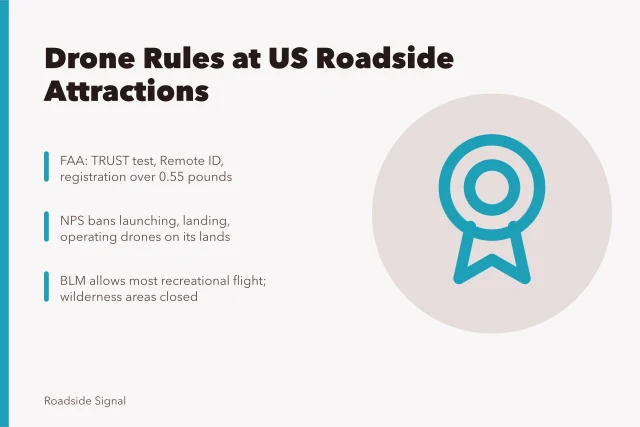
Drone use is the fastest-growing category of trouble. The Fish and Wildlife Service calls harassment from uncrewed aircraft an emerging threat to eagles and other wildlife. Eagles have specific protections under federal law, and the service explains how to view them without harm.
Recovery figures give context: from as few as 417 nesting pairs in the lower 48 states in the early 1960s to more than 71,000 today.
Practical rule: assume a drone is not allowed until you have found the site's own written policy. Many federal sites restrict or prohibit launching, landing and operating.
Pushing wildlife for a frame
Every experienced photographer has watched someone lose an animal for everyone by walking twenty feet closer. Stay in the vehicle where the site suggests it, use the blind if there is one, and treat any change in the animal's behavior as the signal that you are already too close.
There is an upside to doing it properly. The Fish and Wildlife Service actively encourages photographers to share strong refuge images and tag them so they can be used and credited, which is a better outcome than a picture nobody can publish because of how it was taken.
The frames people forget
- The wide shot with the road in it.
- The interpretive sign, readable.
- One frame in the light you did not want, for the record.
- The parking area, so you can find the spot again.
- A photograph of the map or the trailhead board.
Two minutes of unglamorous frames per stop saves hours of confusion later, and they are the frames that make a set usable rather than decorative.
Kit mistakes specific to driving trips
Leaving the camera in a hot vehicle, packing the battery charger in the trunk under everything, and carrying a bag too large to take on a five-minute walk. All three are ordinary and all three cost pictures. Keep one small kit in the cabin and everything else out of the way.
Read the wider failure catalog in what roadside trip mistakes cost, and use the shooting order set out in the photographer's field list for roadside attractions once you are safely stopped.