Features
Part of 5 steps carry a scenic routes plan from corridor choice to fallback
Scenic routes time: which season suits a drive best?
Season decides a scenic drive: opening windows, wildlife and snow closures, daylight hours, and why late September to October is the best scenic routes time.
What to take away
- Season sets which routes exist at all. High routes are shut for months at a time.
- Seasonal closures are often about wildlife, not snow, and they run on fixed dates.
- Daylight, not weather, is usually what limits an autumn or winter driving day.
- Shoulder seasons give the best light and the worst certainty. Plan a fallback.
Picking a scenic routes time matters more than picking a route. The same road can be a summer all-day loop, an autumn half-day, and a locked gate in April. Here is how the year tends to break down for most of the country.
Spring: the least predictable months
Spring is when published information is least reliable. Snowmelt, mud and repair work all land at once, and opening dates move year to year. Treat any spring plan as provisional and confirm within a week of travel.
Spring closure and confirmation window
- December 1seasonal closure begins
- June 30seasonal closure ends
- Within 1 week of travelconfirm opening
Wildlife closures bite here too. The BLM's roundup of winter recreation areas covers Emerald Mountain near Steamboat Springs, Colorado.
It lists a seasonal closure running December 1 to June 30 south of the Ridge Trail, protecting elk during winter and calving. Such closures are common, fixed by date rather than conditions, easy to miss if you only check the weather.
Summer: the widest choice, the worst light
Summer opens almost everything, including high mountain routes and unpaved loops that are impassable the rest of the year. The cost is midday heat, long harsh light and busy pull-offs. Summer routes work best split around the middle of the day: drive early, stop long at lunch, drive again from four.
Route management decides the season. Going-to-the-Sun Road in Glacier National Park, Trail Ridge Road in Rocky Mountain National Park and the Blue Ridge Parkway are all run by the National Park Service, and each of them closes stretches for snow, ice or rockfall instead of on a fixed calendar. Mountain passes on state highways work the same way, with the state department of transportation deciding when the gates open.
Summer driving day split
- Drive early before midday heat
- Stop long at lunch
- Drive again from four
Autumn: the best all-round window
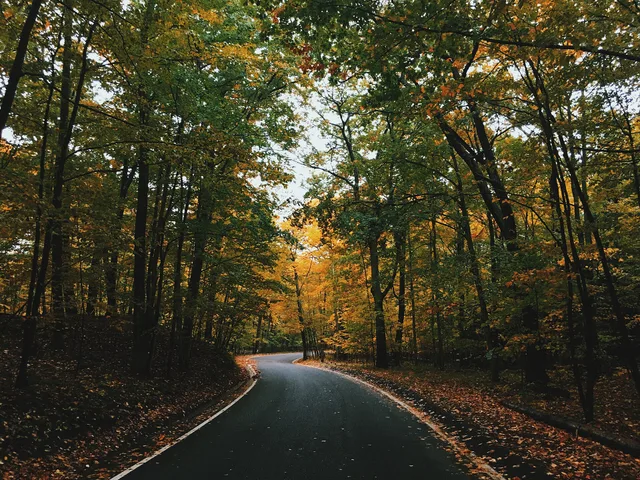
Autumn is usually the strongest season for scenic driving. Roads stay open, temperatures are workable, and there is more to see.
The Fish and Wildlife Service calls autumn on refuges a season of movement, with flocks of ducks, geese and shorebirds heading south, monarchs migrating and bull elk competing for mates. That wildlife activity is a real reason to prefer September and October over July.
Bosque del Apache National Wildlife Refuge in New Mexico is one of the loops worth timing: its auto tour route fills with sandhill cranes, geese and ducks as the season turns. Get there at first light, when the birds are still on the water.
The catch is daylight. Refuge driving loops commonly run sunrise to sunset, and that window shortens fast after the equinox.
Winter: fewer routes, better conditions on the ones that remain
Winter closes high routes and opens desert ones. Low-elevation byways in the Southwest are at their best when summer heat would make them punishing. The light stays usable through the middle of the day rather than flattening everything at noon.
Plan for short days, carry more than you think you need, and accept that a single storm can end a route for a week. Gravel that drains well in October can stay soft for days after winter rain, so surface reports matter more than forecasts.
A simple month test
Before committing, answer four questions for your chosen month.
- Is the route open, according to the managing office rather than a map app?
- How many usable daylight hours will there be?
- Is there a wildlife or maintenance closure on any segment?
- What is the fallback route if this one is shut?
Then match your kit to the month and rebuild the timetable around the daylight hours you will actually have. If the first route is shut, the fallback is the plan, not the backup.