Features
Part of Sorting American roadside attractions into four types worth knowing
Roadside attractions detours: ghost towns, overlooks and the sites worth it
Named ghost towns, overlooks and historic sites that repay a detour, with the access, hours, parking and walking each roadside attraction actually offers.
What to take away
- Roadside attractions earn a detour when the site gives you thirty minutes of walking, reading or shade.
- Rhyolite, Bodie, Calico, Bannack and Dead Horse Point all publish their own access rules; read the site page the week you travel.
- Timed sites with gates belong early in the day; open ruins and overlooks can absorb a late start.
- Two ghost towns in one afternoon is one ghost town too many. Vary the type of stop.
- Anything more than twenty minutes off route needs confirmed hours or it stays a maybe.
A two-hour drive makes almost any stop worthwhile. A nine-hour day does not. The test is what you will do there for half an hour, and what it costs you if the gate is shut.
Ghost towns with ground to walk
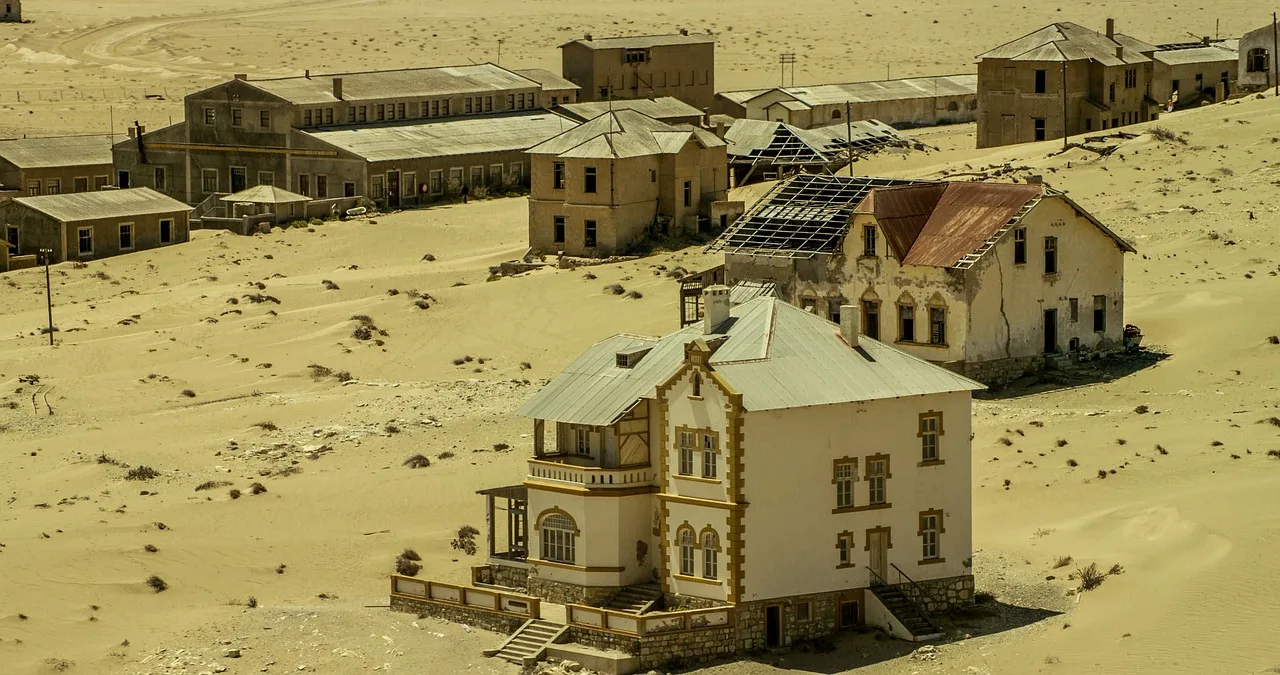
Rhyolite Historic Area in Nevada is the plain case. The BLM manages it as a former gold-mining boomtown, whose Cook Bank Building is among the most photographed ghost town buildings in the West, alongside a house built from glass bottles. Entry is free: day use only, no camping, four miles west of Beatty on NV 374.
Bodie State Historic Park in California asks for more. The preserved mining town east of Bridgeport sits at the end of a graded dirt road about 13 miles off US 395.
Day-use fees run about $8 per adult in recent seasons, and posted hours shrink in winter. Bodie rewards two hours, not twenty minutes.
South Pass City in Wyoming sits on the old Oregon Trail corridor and runs as a state historic site with a season and an entrance fee. The season typically runs from Memorial Day to Labor Day, and the fee is a few dollars per adult.
Its value is the walking distance between buildings, which is what separates a ruin from a photograph.
Calico Ghost Town near Yermo, California, is the family stop. The San Bernardino County regional park sits just off I-15, with a day-use fee of about $10 per adult, a campground, a narrow-gauge railroad and mine tours. Walter Knott of Knott's Berry Farm restored the 1881 silver camp.
Bannack State Park in Montana was the territory's first capital and still holds dozens of buildings from the 1862 gold strike. A gravel road runs west from Dillon, and the park charges a per-vehicle day-use fee during its summer season.
Terlingua, Texas, is the free one. The ruins of a mercury mining district sit beside the west entrance of Big Bend National Park, and the cemetery and old store cost nothing to walk. The chili cook-off fills the place in early November.
Interpretive sites with a building attached
A visitor center turns a fifteen-minute stop into an hour and supplies shade, water and a restroom. It also imposes the strictest timing on your day.
Pompeys Pillar in Montana is the example to plan around. The BLM posts a set season, daily gate hours, a Tuesday maintenance closure, and an entrance gate that closes half an hour before the exit gate. A per-vehicle day-use fee applies, and federal recreation passes cover it.
Visitors can park outside and walk in during daylight when the gates are closed, so read that page before you commit to a morning arrival.
Overlooks that ask for a short walk
An overlook with fifty yards of trail beats a pull-off with a view. The walk gives you a reason to stay, moves the composition, and puts distance between you and engine noise.
Dead Horse Point State Park near Moab, Utah, is the standard: a per-vehicle state park fee of about $20, paved access, rim trails and a picnic area. The rim sits about 2,000 feet above the Colorado River.
Mather Point on the Grand Canyon's South Rim is paved, wheelchair accessible and steps from the visitor center. A $35-per-vehicle entrance fee covers seven days; the crowd thins before 8 a.m.
Grand View Point at the end of the Island in the Sky road in Canyonlands, Utah, looks over the White Rim about 1,000 feet below. The park entrance fee covers it, and the mesa top offers no shade.
Cadillac Mountain in Acadia National Park, Maine, needs a timed-entry reservation on the summit road from roughly mid-May to mid-October. The reservation runs about $6 per vehicle on recreation.gov and does not replace the park entrance fee.
Mesa Verde's park point overlooks in Colorado work the same way, on a longer approach and an NPS entrance fee.
Look for the words boardwalk, loop or picnic area on a site page. Each signals ground built for dwelling, not glancing.
Where the road itself is the attraction
The Blue Ridge Parkway runs 469 miles between Shenandoah National Park, Virginia, and Great Smoky Mountains National Park, North Carolina. It is a National Scenic Byway with milepost-numbered exits, no commercial traffic and no entrance fee. Speed limits stay at 45 mph or below, so plan by miles rather than hours.
Skyline Drive carries the same idea through Shenandoah and charges a per-vehicle entrance fee the Parkway does not. Colorado's Gold Belt Tour Scenic and Historic Byway threads the gold camps around Cripple Creek and Victor. Small green backroad signs mark the same kind of route at county scale.
Plan these the opposite way. Do not schedule a tight arrival, because the driving is the experience and hurrying it defeats the purpose.
What to skip on a long day
- Single objects with nowhere to park safely.
- Any stop more than twenty minutes off route without hours confirmed this week.
- Museums whose opening times you could not verify.
- A second stop of a type you already made that day.
Fitting them into the route
Place verified, timed stops first and flexible ones last. Then decide what you would cut if you were an hour behind.
The sorting method in our guide to roadside attractions across the country does that job, and the frames in the photographer's field list will tell you whether a stop deserved the mileage.
Common questions
How far off route is too far?
Twenty minutes each way is a reasonable ceiling on a long driving day, unless the stop is the reason for the trip. Past that, the detour starts dictating the schedule instead of filling it.
Do I need to book ghost town or ruin visits?
Usually not. Rhyolite and Terlingua are free and open, while Bodie, Bannack and Calico collect at the gate. Check whether the site is day use only, whether camping is allowed, and what the road surface is before you turn off the highway.
What makes a stop worth an hour?
Something to walk, something to read, and shade or shelter. Two of the three is normally enough to justify the stop.
Are private roadside attractions worth the detour?
Sometimes, but unverified hours are a real risk. Keep them on route rather than at the end of a spur, where a closed gate costs you the drive twice.