Costs
Road trip budgets cost: BLM fees at two stops
Road trip budgets cost more than access fees alone: published BLM day-use and camping fees at Santa Cruz Lake and Red Cliffs help price a scenic outing.
What to take away
- Driving, sleeping, eating and access all belong in a road-trip budget.
- Public-land fees are published, so they are a concrete line to price.
- Check whether an annual pass covers the areas on your route before buying.
- Budget the trip you will actually drive, including the detours you already know you will take.
Road trip budgets cost more than published access fees alone. People price the interesting parts carefully and the boring parts optimistically, then run out of money on the fourth night. The public-land stops below offer specific charges to include when planning a scenic outing.
Four budget categories
- [Drivingfuel, tolls](/unusual-roadside-stops-costs-transport-stays-and-tickets), and a share of wear. Route mileage and terrain affect the total.
- Sleepingthe choice that varies between people doing the same route.
- Eatingplan meals as part of the total.
- Accessentry fees, permits and parking. The examples below show published public-land charges.
Keep access fees in perspective alongside the other trip costs.
Four Road Trip Budget Blocks
Driving
- Size
- Largest or second
- Control
- Partly fixed
- Risk
- Hidden wear
Sleeping
- Size
- Varies most
- Control
- Most controllable
- Risk
- Compounds nightly
Eating
- Size
- Predictable
- Control
- Planning-dependent
- Risk
- Overspent
Access
- Size
- Smallest
- Control
- Fixed fees
- Risk
- Overestimated
Access is smaller than people expect
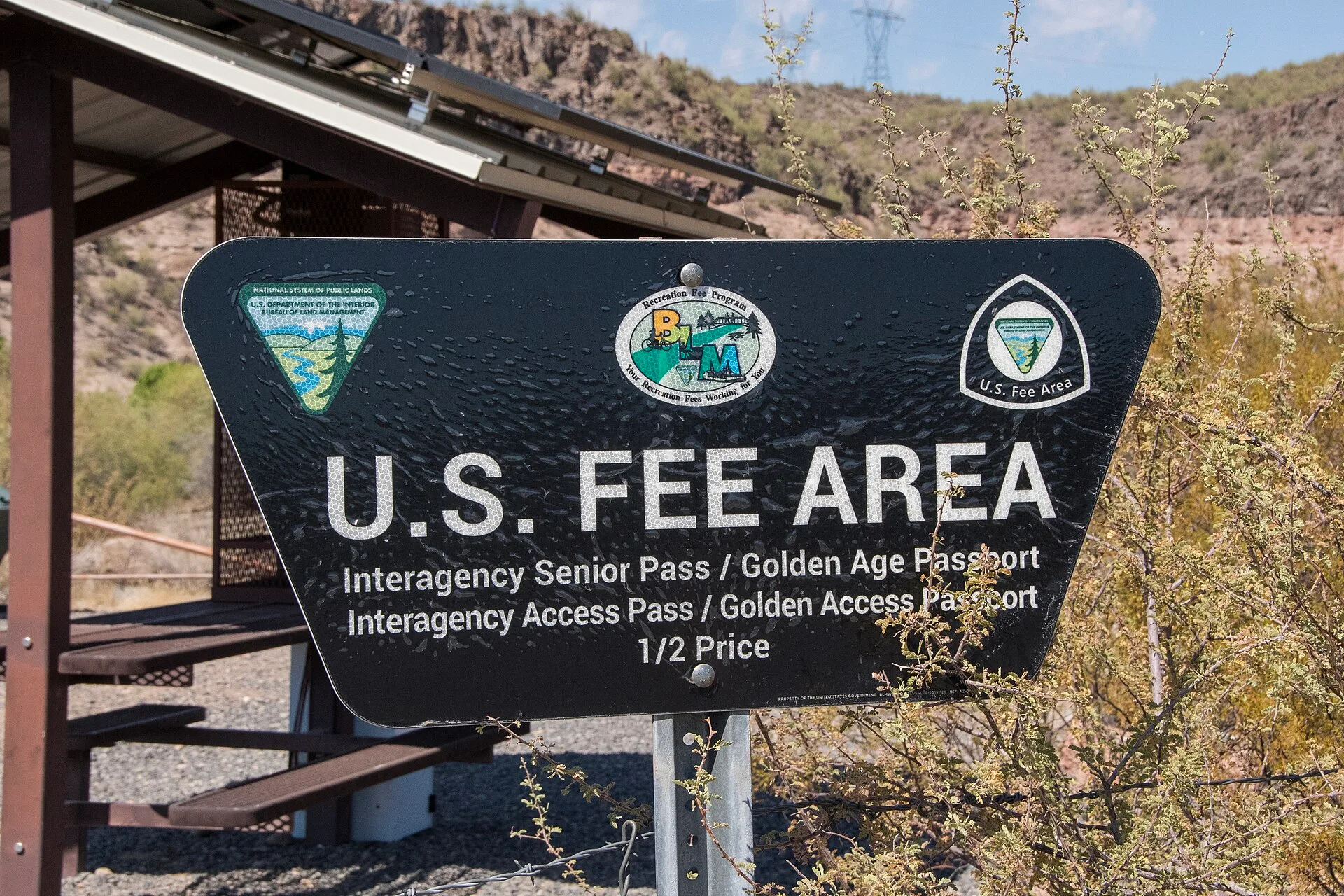
Federal recreation fees are published per site and modest. The BLM's Santa Cruz Lake Recreation Area in New Mexico lists day use at 5 dollars per vehicle and camping at 9 dollars per night, first come first served. A 20 dollar annual day use pass per vehicle covers three Taos Field Office areas.
Published Federal Recreation Fees
- 5Santa Cruz Lake day use per vehicle
- 9Santa Cruz Lake camping per night
- 20Annual day use pass per vehicle
- 15Red Cliffs camping per night per site
Camping rates elsewhere sit in a similar band: Red Cliffs Recreation Area in Utah gives camping fees of 15 dollars per night per site.
The access charges shown here are separate from lodging costs and should be budgeted as their own line. A local annual pass is worth buying only if your route stays inside the area it covers.
Sleeping choices affect the budget
The gap between camping and motels is the single biggest controllable difference in a road trip budget, and it compounds every night. A trip that camps four nights out of six is a different financial object from the same route done in motels, even though the driving is identical.
Mixed patterns work well. Camp where the site is part of the experience, book a room where you need a shower, a laundry or an early start.
Driving costs more than the fuel gauge suggests
Fuel is the visible part. The invisible parts are the detour mileage you have not counted, the drop in economy on gravel and mountain grades, and the wear items that a long trip brings forward. Price the route, not the map line, and add a maintenance allowance on any trip over about a thousand miles.
Where budgets actually leak
- Unplanned meals bought at the only place open.
- A second night in an expensive town because the day ran late.
- Fuel bought in the most convenient place rather than the cheapest.
- Paid attractions chosen on the day, without comparison.
- Cancelation charges on something booked too early.
Planning meals, overnight stops, fuel stops and paid attractions before departure can help keep these choices within the budget.
Common questions
What percentage should go to contingency?
Are annual passes worth it?
How do I budget fuel accurately?
Is camping always cheaper?
In this guide
- Road trip photography: spend on position, not on glassRoad trip photography that puts position before lenses: named refuge photo blinds, pull-offs and boardwalks, what to buy at home, and a simple detour rule.
- How to Compare a Guided Road Trip to a Self-Drive BaselineA cost-first method: build a self-drive baseline for any guided tour, price their inclusions, and spot what's free. Compare road trip budgets on your own terms.
- Free stops: road trip budgets options close to your routeFree stops are the smartest road trip budgets options: no-fee BLM sites like Killpecker Sand Dunes and named urban national wildlife refuges near major cities.
- Quebradas Back Country Byway: five planning mistakesFive planning mistakes on a Quebradas Back Country Byway weekend, and what each one does to road trip budgets, supplies and timing.