Costs
Part of Value, upkeep and fit: a three-part test for unusual roadside stops
5 things to weigh up on unusual roadside stops cost
What odd roadside stops really cost: mostly free to enter, expensive to reach, and priced in fuel, tires and the nights you spend getting to them.
What to take away
- The 5 things to weigh up on unusual roadside stops cost are entry, fuel, vehicle wear, overnight stays and supplies.
- Entry is often $0. Burr Point Overlook in Utah, Cadillac Ranch in Texas and Carhenge in Nebraska charge nothing.
- The money sits in the approacha 45-mile dirt spur each way is 90 miles, about 4.5 gallons, and $16 at $3.50 a gallon.
- Unpaved miles bring maintenance forward. Budget $0.10 to $0.20 a mile for tires, alignment and shocks.
- Overnight costs run from free dispersed camping on BLM land to $70 to $130 for a motel room in a gateway town.
The 5 things to weigh up on unusual roadside stops cost are entry, fuel, vehicle wear, overnight stays and supplies. The economics of unusual roadside stops are the opposite of a normal attraction.
Entry is frequently zero and the surrounding costs are high. The budget question is never the ticket price, but the distance and what it costs to cover.
Tickets: usually nothing, occasionally specific
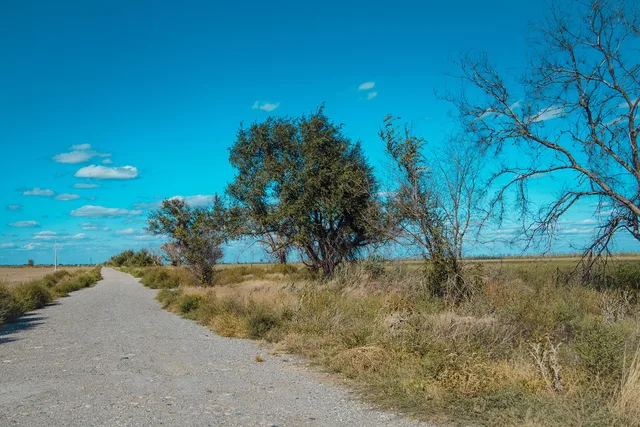
Fee-free is the norm at odd stops. The BLM's Burr Point Overlook in Utah sits above the Dirty Devil River, reached by a dirt route across flat country to the cliff tops.
It lists no fees and no developed facilities, with directions of eleven miles east of State Route 95 at milepost 17.
Cadillac Ranch, west of Amarillo, Texas, off Interstate 40, is free to walk into during daylight. Spray paint from vendors at the gate typically costs $5 to $10 a can.
Carhenge in Alliance, Nebraska, charges nothing and is open daily. Paid stops exist, such as Meteor Crater in northern Arizona, where adult admission typically runs $20 to $30.
Where a charge exists, it usually attaches to one specific facility, not the place itself, and it has rules.
At Pixley National Wildlife Refuge in California, the Fish and Wildlife Service runs one photography blind. It is available by reservation only, from October 1 through March 31, with no fee for its use. Free, but booked in advance, in a set season.
Transport: where the money actually goes
Price the approach, not the site. Three things drive the number up.
What drives the approach cost
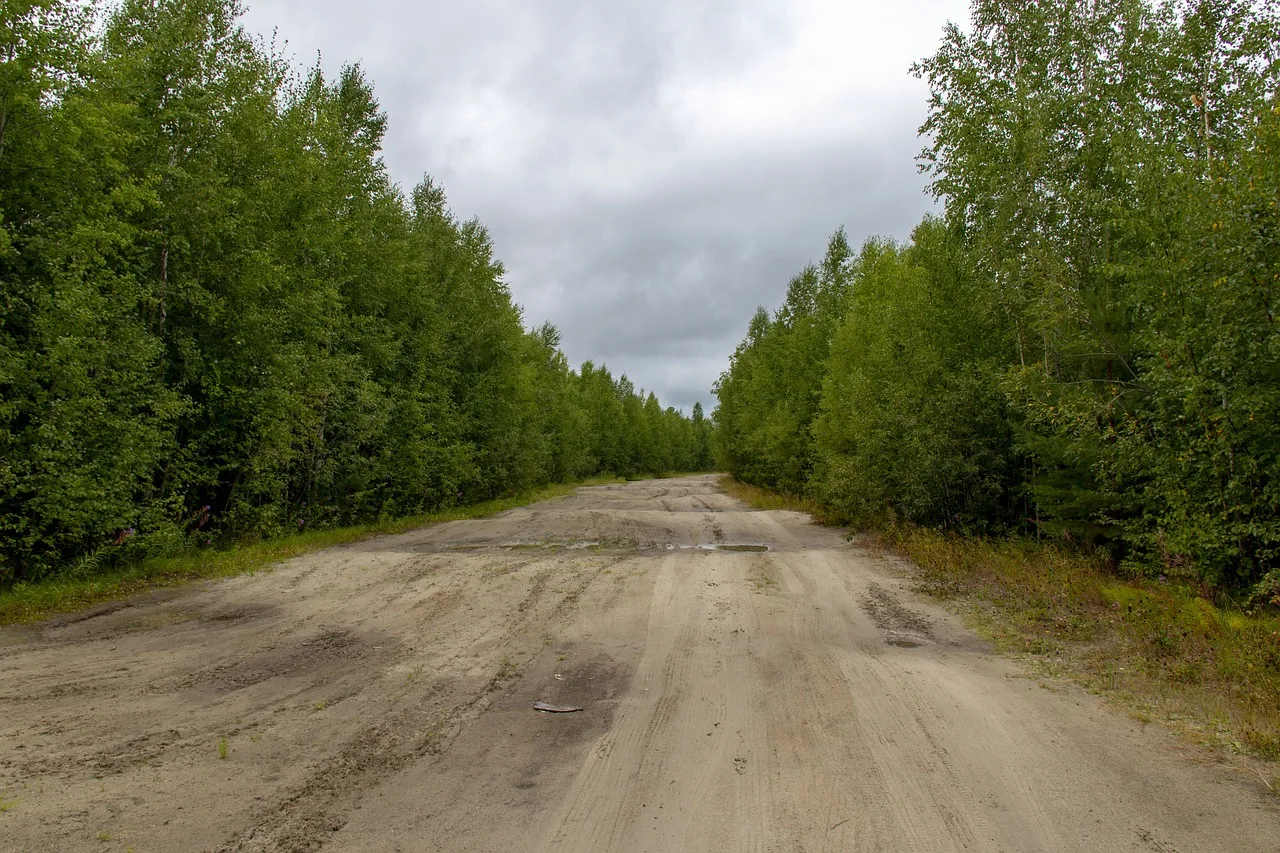
- 30-60 mileseach way off the highway
- 45 milesoff-highway example stop
- 3cost drivers distance, surface, backtracking
Fuel prices move, so use a round $3.50 a gallon, inside the $3.00 to $4.00 US range in most markets.
A stop 45 miles off the highway costs 90 miles of driving. In a vehicle that gets 25 mpg on pavement and 20 mpg on dirt, that is 4.5 gallons, about $16, plus roughly two hours of driving.
A stop that is free to enter and 45 miles off the highway is not a free stop. Work out the round trip mileage before deciding it is cheap.
Vehicle wear is a real line
Washboard gravel, sharp rock and sand are hard on tires, suspension and brakes. A trip built around remote sites brings maintenance forward.
A set of four all-terrain tires fitted typically runs $600 to $1,400. An alignment after rough roads typically costs $80 to $150, and a pair of shocks or struts installed $400 to $1,200.
A dusty route also wants a new air filter, typically $20 to $40, and fresh oil and filter, typically $60 to $120.
Budget a wear allowance of $0.10 to $0.20 per unpaved mile, so 200 miles of dirt sets aside $20 to $40, and carry a usable spare. Then a puncture costs an hour, not a day.
Stays: distance from the site sets the price
Odd stops are remote, so the nearest bed is often an hour away, and the nearest cheap bed is farther still.
On BLM and Forest Service land, dispersed camping is usually free, with 14-day stay limits in many areas. Developed federal campgrounds typically charge $5 to $25 a night, and national park campgrounds $15 to $40.
A motel room in a small gateway town typically runs $70 to $130 a night in most markets.
Two patterns work: camp near the site, usually the cheapest, and arrive at first light. Or base in the nearest town with services and accept the drive, which suits parties wanting a shower and a restaurant.
The expensive third pattern is booking without checking the distance, then driving two hours a day to reach the site. Two hours each way is 120 miles, about 5 gallons and $18 in fuel a day on top of the room.
What replaces the ticket line
Money once spent on entry now buys supplies: water, food, fuel margin and gear for an unserviced site. Budget these as trip costs, not household spending.
A five-gallon water container typically costs $20 to $40, and gallon jugs about $1 to $2 each. A portable toilet runs $80 to $150, and an extra fuel can $30 to $60.
Two days of food typically adds $30 to $60 a person. See what to pack for a trip built on odd stops for the list.
Screen candidates with odd stops compared for value, upkeep and fit.